


How to Transition to Offshore Teams Without Losing Control
Optimize your 2026 offshore strategy with a Mirror Stack, Zero Trust security, and AI to scale execution while saving 40-70%.
9 min read
Make offshore code reviews smooth and scalable: clear expectations, faster feedback loops, and stronger code quality.
Written by: Nasif Sid Created on: 24 Feb 20266 min to read

Code reviews with offshore developers work when expectations are clear, feedback is structured, and reviews fit your delivery pace. This blog shows how to protect code quality while keeping offshore software development fast and predictable.
As more startups rely on offshore software development to scale, code reviews often become a friction point. Time zones, unclear standards, and rushed feedback can slowly weaken code quality and impact business outcomes. What starts as a small review delay can turn into technical debt, missed timelines, and rework that leadership never planned for.
This guide breaks down how to run code reviews with offshore teams in a way that supports your team instead of slowing it down. You will learn why reviews fail, how to fix the process, and how to build habits that support long term quality.
Effective communication plays a critical role in offshore software projects, and strong review systems are now a core part of how modern companies build and scale products globally.
Code reviews with offshore teams break down when feedback is slow, context is missing, and standards are unclear. These gaps reduce code quality and quietly slow your delivery.
When you’re managing offshore software projects, these problems usually come from how your review process interacts with time zones, communication habits, and team structure.
Here’s where things tend to go wrong:
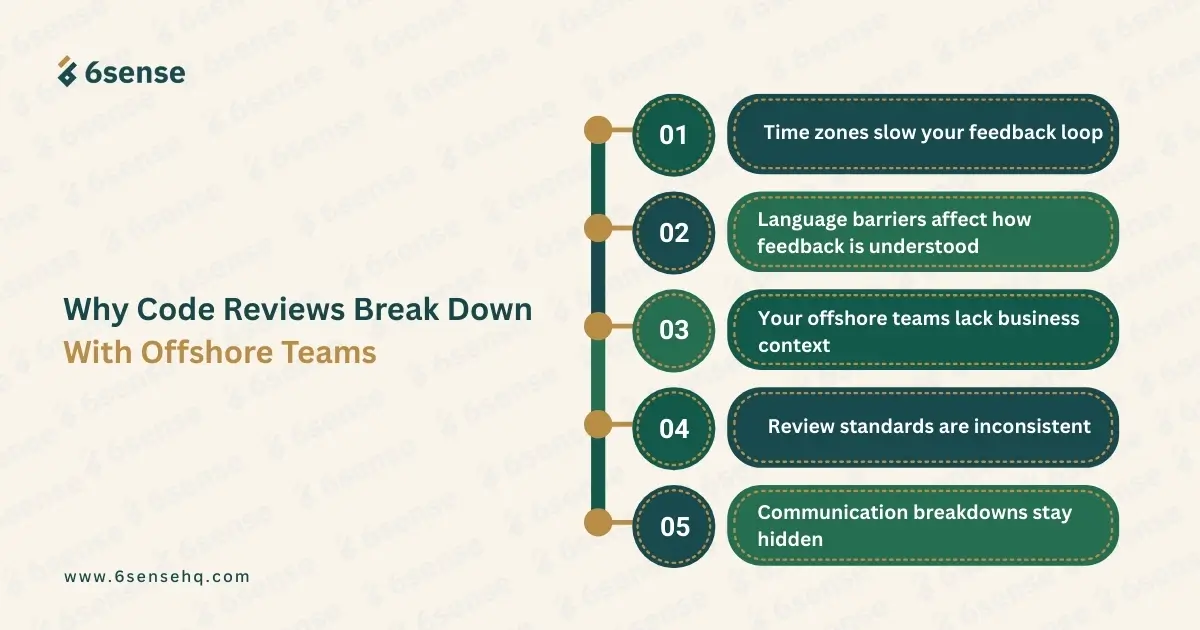
When your reviewers and devs work in different time zones, pull requests often sit idle. This delay can stretch reviews by 12 to 24 hours and slow your overall development cycle.
Even skilled developers can misinterpret written comments. Small gaps in language clarity can lead to rework or hesitation during the code review process.
If you don’t explain why a change matters, reviews stay surface-level. Code may look correct but still miss your business goals.
Without clear guidelines, each reviewer applies personal preferences. Over time, this creates technical debt and frustration across offshore teams.
Silence during reviews can feel like progress. In reality, it often signals confusion that only becomes visible when project deadline slip.
If you want your review system to scale, it has to work without constant intervention from you. The right setup protects quality, keeps delivery moving, and builds trust across your team.
When you’re leading distributed engineering teams, your role is to design a system that removes friction instead of creating more oversight. Here’s how you can bring everything together in a way that actually works:
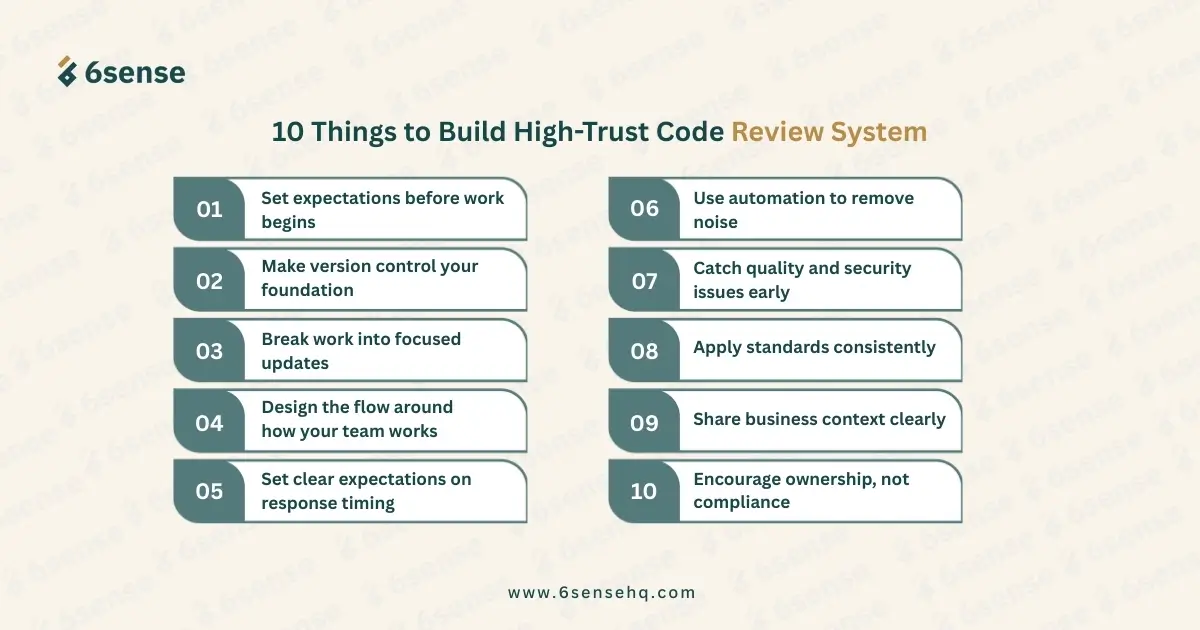
You need shared standards early. When your team knows what good output looks like, feedback becomes easier to understand and easier to apply.
All changes should move through one source of truth. This gives you visibility into progress and keeps collaboration clean across the development lifecycle.
Smaller changes are easier for you and your team to review. This keeps feedback practical and prevents long review cycles from slowing momentum.
Accept that your team operates on different schedules. Use short overlap windows for complex topics and rely on asynchronous communication for everything else.
You should define how quickly feedback happens. Predictable turnaround times keep work moving and prevent silent delays.
Automated testing, continuous integration, and GitHub Actions should handle routine checks. This allows your reviewers to focus on logic, structure, and risk.
Upfront checks reduce rework later. When issues are identified early, fixes are faster and less disruptive.
Your team needs to see the same expectations applied across the board. Consistency builds confidence and removes uncertainty.
When your team understands why a change matters, decisions improve. Context helps align priorities and leads to better outcomes.
Invite your developers to explain decisions and suggest improvements. This builds accountability and strengthens team culture over time.
When your code review process isn’t working, quality issues repeat and delivery slows down. These signals show up early if you know where to look.
If you are working with offshore teams, these are the most common warning signs:
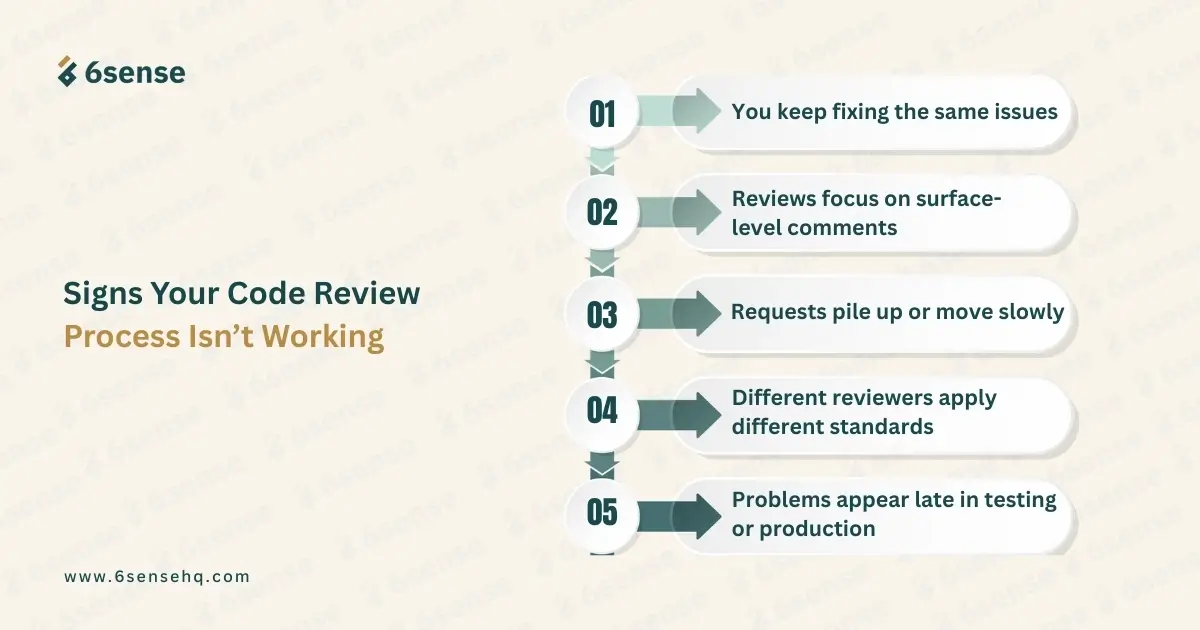
When the same problems appear across your requests, your feedback is not translating into learning. Over time, this makes it harder to maintain code quality.
If feedback stays limited to formatting or syntax, deeper logic issues slip through. This increases technical delays inside offshore software projects.
When reviews sit idle, your development cycle slows. Delays like this often push project timelines without clear visibility.
Inconsistent feedback confuses developers and creates frustration. This leads to uneven quality across offshore teams.
When issues surface downstream, your code review process is failing to catch problems early. Reviews should reduce risk, not postpone it.
Most quality issues in offshore software development don’t come from developers. They come from how leadership sets expectations around feedback, standards, and ownership.
If you’re running offshore software projects, these are the mistakes that quietly cause friction:
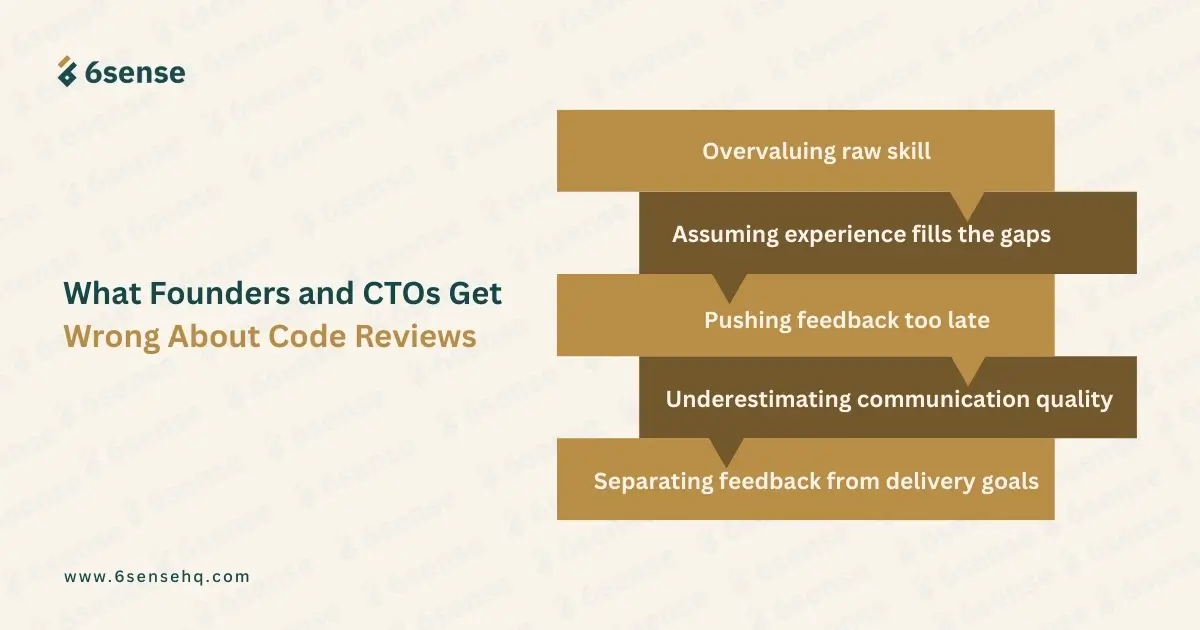
Strong technical skills don’t guarantee consistent output. Without shared standards and guidance, feedback becomes subjective and results vary across the team.
Even a senior engineer needs context. When business intent isn’t shared, reviewers focus on how the code works, not whether it supports the product.
When reviews happen near the end of delivery, small issues compound. This creates long-term maintainability problems and slows future releases.
How feedback is written matters. Vague or poorly framed comments create confusion and resistance instead of improvement.
When review workflows aren’t aligned with project management, teams lose momentum. Feedback should guide progress, not interrupt it.
Strong review systems protect quality, speed, and long term outcomes when you work with offshore teams. When feedback is structured and consistent, it supports growth instead of creating friction.
If your company relies on offshore development, how you handle reviews directly affects business growth and project success. Clear expectations, the right tools, and thoughtful feedback loops help your team stay aligned and deliver reliable results.
You don’t need more meetings or stricter control. You need systems that fit how your developers work and scale as your product grows.
If you want to pressure test your current approach or tighten your review workflow, let’s talk. A short strategy call can help you spot gaps early and build a process that supports your business goals.
Optimize your 2026 offshore strategy with a Mirror Stack, Zero Trust security, and AI to scale execution while saving 40-70%.
9 min read

Stop scrolling, start hiring: 15 best offshore dev sites for 2026 with rates, vetting process, and quick picks. Tap in!
14 min read

Offshore ROI in 2026: calculate true TCO, payback & NPV, dodge rework traps, and scale faster, grab the checklist now!
7 min read