


How to Transition to Offshore Teams Without Losing Control
Optimize your 2026 offshore strategy with a Mirror Stack, Zero Trust security, and AI to scale execution while saving 40-70%.
9 min read
Scale your team, slash costs, & speed up delivery of software development. Offshore development services makes it possible. Know its benefits & challanges.
Written by: Nasif Sid Created on: 12 Aug 202510 min to read

When you need to build software fast and affordably, offshore development services can be your best option. It means hiring skilled developers from another country to work on your project, often at lower costs and with flexible timelines.
I’ve seen many companies, both big and small, utilize offshore teams to scale quickly, fill talent gaps, or access expert skills that they can’t find locally. If you’re stuck waiting for the right people or paying too much for local hires, this might be your solution.
In this guide, I’ll walk you through everything you need to know, from when to hire an offshore development team to how to manage one smoothly. Let’s make this journey easier and smarter for you.
Offshore development service means hiring a software team in another country to build or manage your tech projects. This could include mobile apps, websites, testing, cloud systems, or even AI tools. You save money because hourly rates are lower, and you get access to highly skilled developers who work remotely.
For example, companies in the U.S. or Australia often hire teams from India, Bangladesh, or Eastern Europe to reduce costs and speed up delivery.
According to Businesswire, the global IT outsourcing market is projected to reach $425.19 billion between 2021 and 2026. It shows how fast offshore development is growing. It's a smart, flexible way to build great software without hiring full-time, in-house staff.
Hiring offshore is easy. Hiring the right offshore team, from experienced hubs like India and Bangladesh, is what actually makes the difference. Here’s why businesses that succeed offshore focus on quality, not just price:
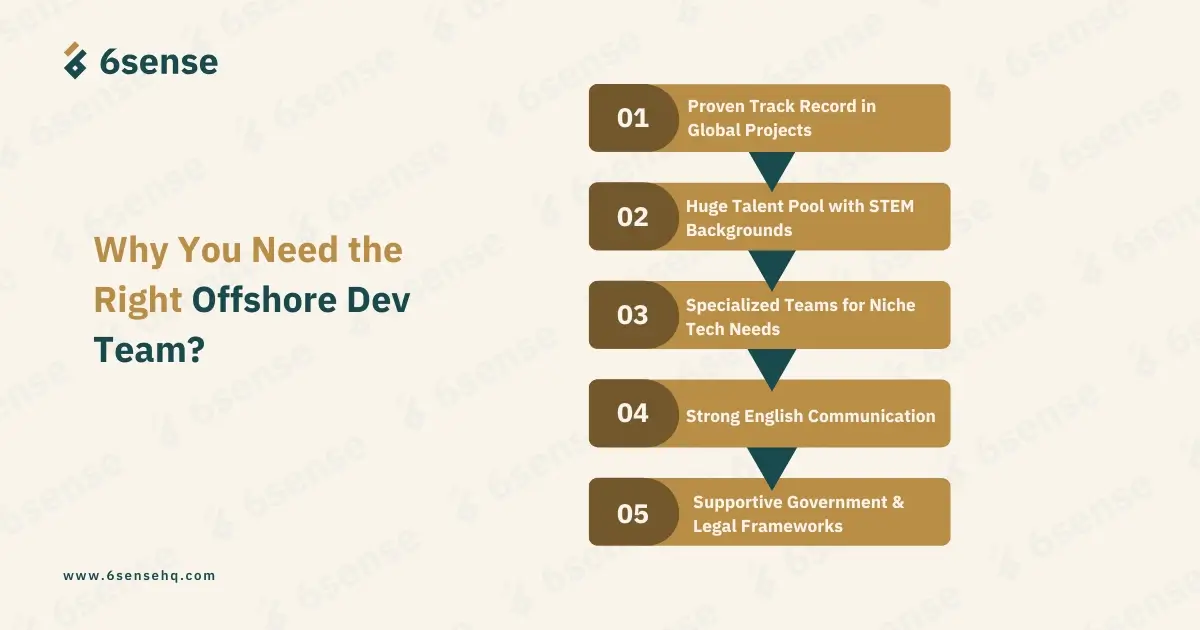
Top offshore companies in Bangladesh have years of experience working with U.S., UK, and Australian clients. They understand how to meet international standards in code quality, delivery timelines, and client reporting, something freelance platforms or no-name vendors often miss.
India produces over 1.5 million engineering graduates annually, and Bangladesh’s IT sector is growing rapidly with strong government support and training. This gives you access to a large, well-educated workforce, trained in software engineering, DevOps, and emerging tech like AI and blockchain.
Many offshore providers in these countries offer dedicated teams for specialized areas like fintech, healthcare, e-commerce, and SaaS. You don’t have to hunt for niche roles one by one, they already have domain experts in-house ready to start.
English is the working language in most Bangladeshi IT companies. Unlike teams in some other regions, communication doesn’t require extra translation, and business culture is closely aligned with Western clients, especially when paired with a clear communication protocol.
Bangladesh has IT-friendly policies, export incentives, and strong legal frameworks to protect data and IP. The country also encourages freelancing and outsourcing with minimal red tape, making it safer and easier to work across borders.
You need offshore development services when your business needs to move faster, scale smarter, or stay lean without sacrificing quality. Offshore support is ideal when internal resources are tight, timelines are short, or local hiring becomes a bottleneck.
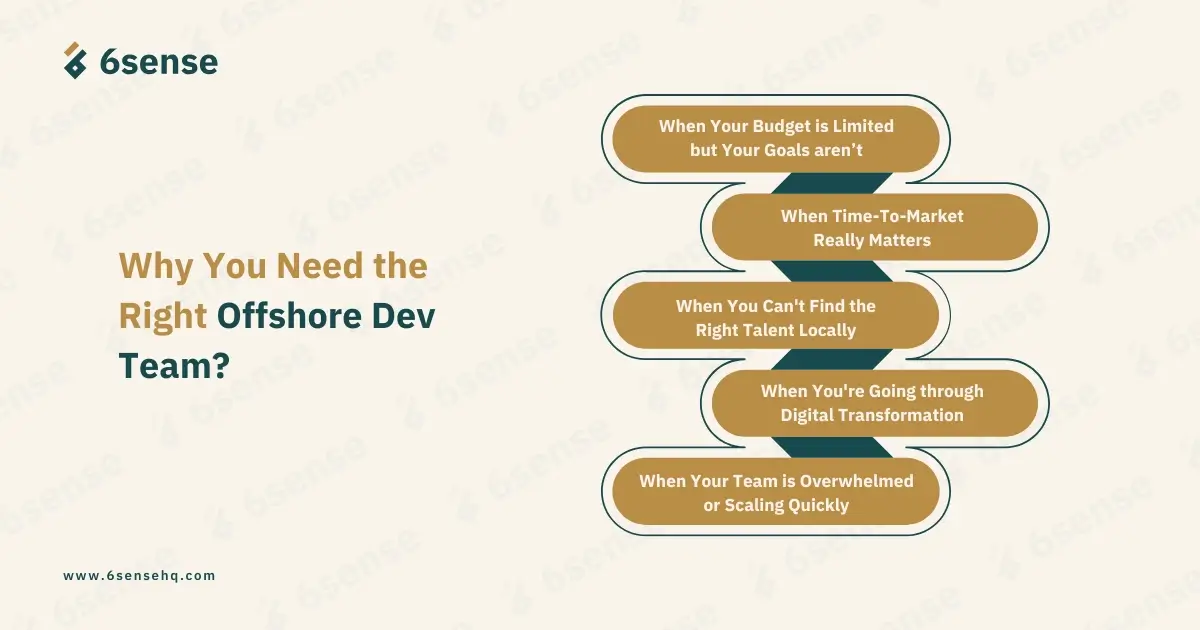
Hiring developers locally can take months, from interviews to onboarding. Offshore teams, especially in countries like India and Bangladesh, are ready to start within days. This is useful when you're short on time but need experienced hands on deck immediately.
If you have limited funds but still want top-tier developers, offshore is the way to go. Proshore confirms that offshore rates can cut costs by up to 60%, allowing you to build quality software without blowing your budget on salaries or overhead.
Your internal team might be skilled but overloaded. Offshore development helps distribute the workload so your core team can focus on critical tasks. According to Proshore, this division of labor enhances delivery speed and reduces the risk of burnout.
Need a blockchain developer or cloud specialist? Offshore vendors already have niche experts on staff. You don’t have to train anyone from scratch. Proshore notes that this is one of the fastest ways to bring deep expertise into your project.
Time zones work to your advantage. Offshore teams often work while you sleep. This means your project can move forward 24/7. With round-the-clock productivity, you shorten time-to-market and meet product launch deadlines without rushing your in-house staff.
Offshore development services offer more than just lower costs; they give you speed, flexibility, and access to talent that might be hard to find locally. If you want to grow faster without burning out your team or breaking your budget, this is the way.

With offshore teams, you're not betting your entire budget on one in-house hire. You can try bold product ideas, experiment with features, or launch quickly, because you’re spending less and can shift direction without burning cash. More flexibility means more freedom to innovate.
When you hire offshore, you skip the legal and financial stress that comes with full-time staff. No employee contracts, benefits, insurance, or HR complications. It keeps your business light, fast, and legally safe, especially if you’re working across borders.
Forget months of searching, interviews, and negotiations. Offshore teams are ready to go. You skip the recruiters, save on hiring fees, and get started quickly with pre-vetted developers who already know how to work on remote projects.
Unlike traditional hiring, many offshore providers offer refund policies or payment protection through secure contracts. If things don’t go as planned, you don’t lose everything. That kind of safety net is rare and valuable when building software.
The talent is already assembled and trained. Whether you need frontend, backend, DevOps, or QA, offshore vendors offer complete teams ready to plug into your project. You don’t have to hand-pick each role; they bring the right mix from day one.
Offshore development services can save money and speed up your projects, but only if they’re managed right. Without clear planning and the right partner, you may face delays, confusion, or hidden costs that outweigh the benefits. Here's what to watch out for:
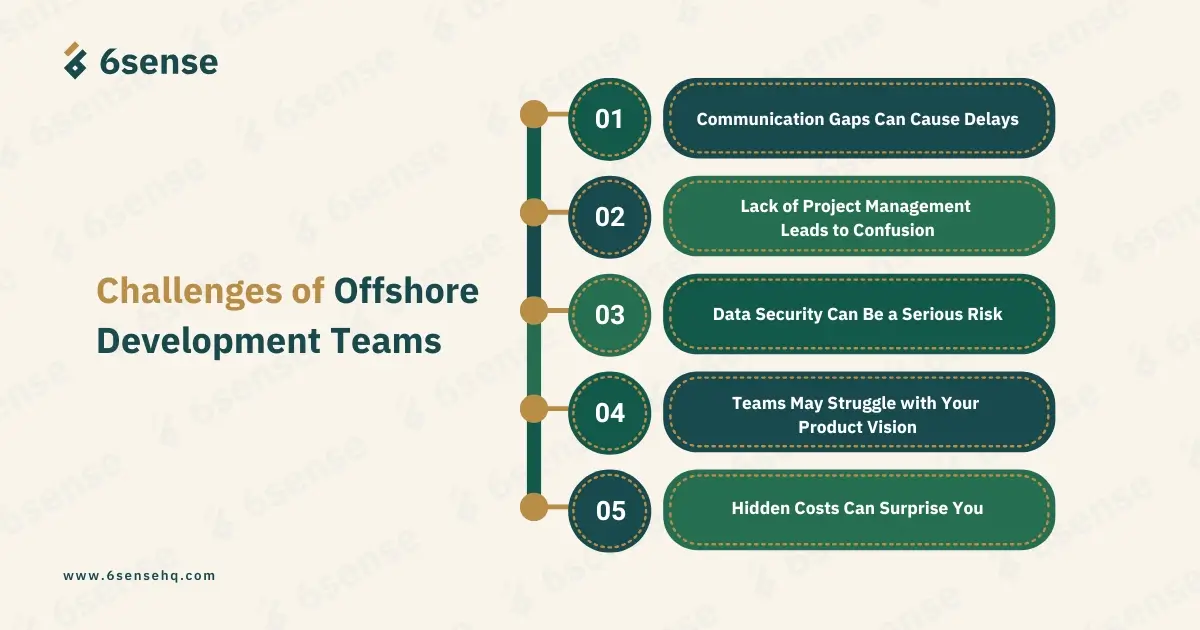
Offshore service providers often work in different time zones, which can slow down replies or decision-making. If communication isn’t clear, tasks may be misunderstood or delayed. To avoid this, use shared tools like Slack or Trello and always confirm instructions in writing to keep everyone aligned and moving forward.
Some offshore service providers wait for detailed instructions instead of taking full ownership of the project. If they lack a proactive approach, you might end up doing the thinking for them.
Choose a provider that takes initiative, assigns a dedicated project manager, and works as a true partner, not just an order taker.
When using offshore services, you're often sharing sensitive files, code, and business data. If your service partner doesn’t follow strong security standards, you could face legal or financial problems.
Always sign NDAs, check compliance with GDPR or local laws, and ensure secure tools are used for data access and storage.
Service providers may not fully understand your business goals unless you explain them clearly. They may deliver the task but miss the "why" behind it. To fix this, hold regular strategy calls, share user stories, and treat your offshore team as part of your product process, not just your coding vendor.
The hourly rate might look low, but offshore services can involve extra charges for onboarding, project management, or tool licenses. If not planned well, these can erase your cost advantage.
Always ask for a full cost estimate upfront and check if the provider includes things like testing, updates, and support.
Offshore software development services work like a remote extension of your development team. You stay in control of the project while the offshore partner helps you build, manage, and support the team behind the scenes.
Here’s how the whole process usually works:
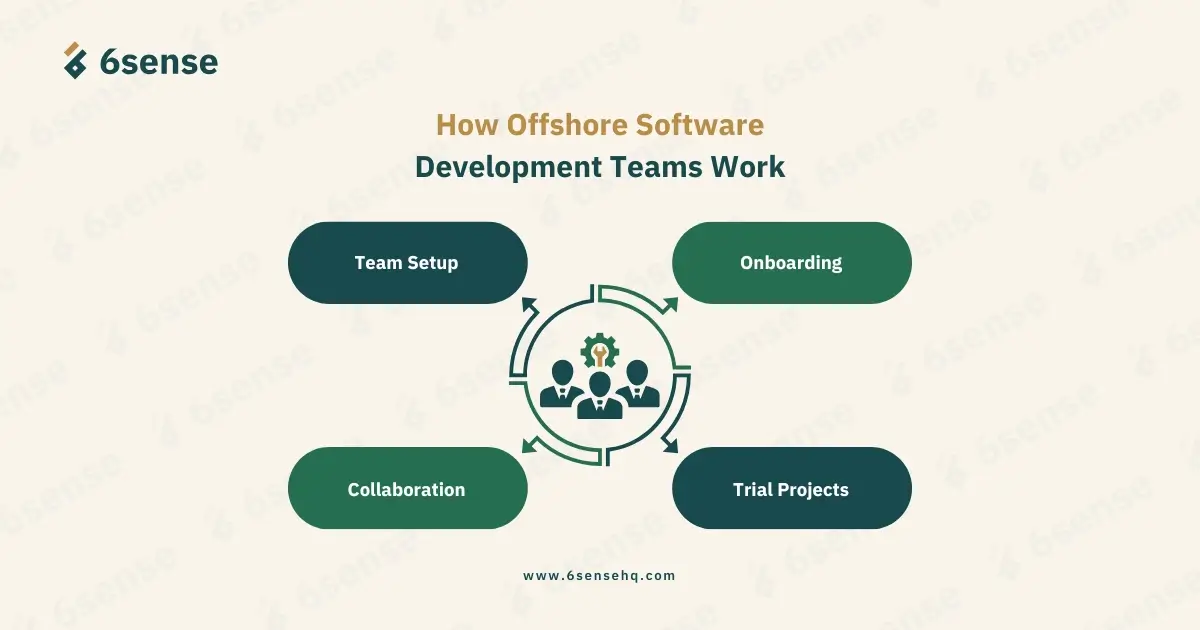
You start by defining what you need: skills, tech stack, and the size of your team. Then, your offshore partner helps find and form the right group. These teams are usually built from a large talent pool and matched to your exact project needs, saving you the trouble of long local hiring cycles.
Once the team is selected, you get to interview and approve each person. After that, they’re onboarded with your tools, timelines, and working style. They join your daily standups, use your task boards, and follow your internal processes, just like in-house team members, but working from another location.
You stay in charge of the project and manage tasks through tools like Slack, Zoom, Jira, or Trello. The offshore team blends right into your workflow. Meanwhile, the vendor takes care of things like HR, payroll, and team support—so you can focus on delivery instead of admin work.
Before making a big commitment, you can start with a small project: a feature, bug fix, or prototype. This trial lets you test communication, coding quality, and teamwork. If it goes well, you move forward confidently.
As one note says: “Start with a pilot project before long-term commitment.” It’s innovative and low-risk.
You can find the best offshore development service provider, like 6sense HQ, by checking their technical skills, communication habits, legal protection, pricing, and previous work. A good service provider feels like a partner, not just a vendor.
Here's how to make the right choice step by step:
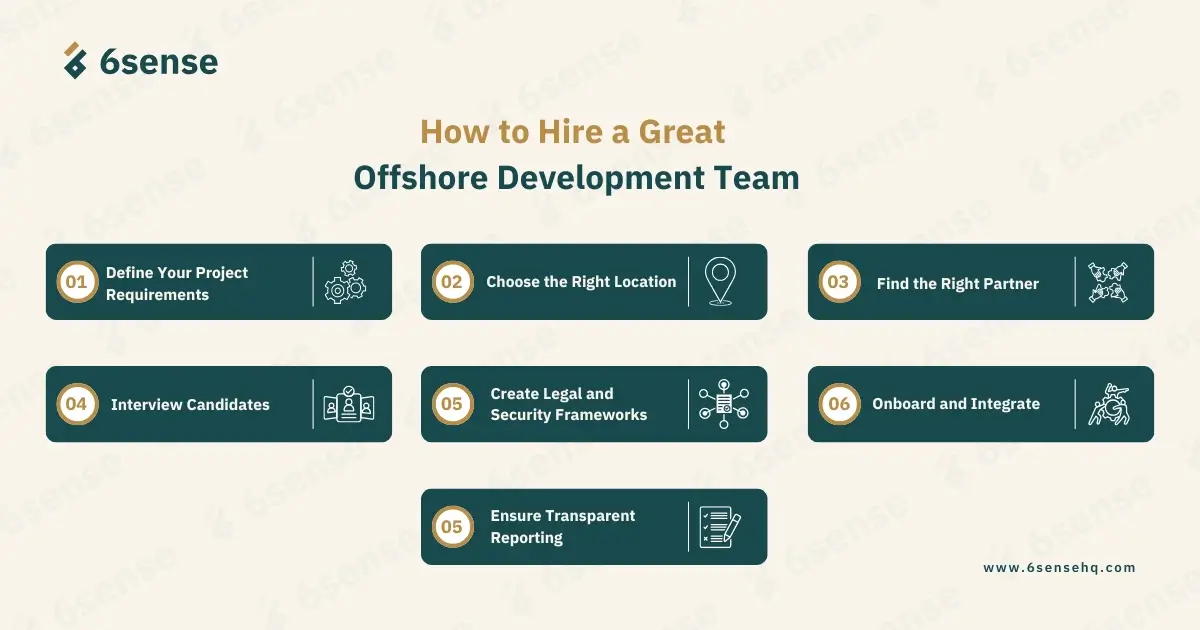
Always start by checking the provider’s past work. Look at the types of clients they’ve worked with, what industries they specialize in, and whether they’ve handled projects similar to yours. A strong portfolio shows they can deliver results, not just make promises.
Ask about their tech stack and the skill levels of their team members. Are they experienced in your required technologies, like React, Node.js, or cloud platforms? A good offshore service provider should have front-end, back-end, QA, and DevOps experts who can work together as one unit.
Know how they plan to work with you. Will you get a dedicated team? Are they flexible with changing the scope? Some providers lock you into contracts, but other companies, like 6sense HQ, offer Agile offshore services with daily updates, sprint planning, and fast onboarding, making it easier to adapt and grow.
A great offshore provider has clear processes, regular updates, and strong communication. Ask how they track tasks, and do they use tools like Jira or Trello? Do they hold weekly meetings? Communication gaps cause delays, so test their responsiveness before you sign anything.
Make sure there’s a solid legal agreement. This includes NDAs, IP rights, and data protection policies. Ask where their company is registered and if they follow local and international compliance rules like GDPR. It protects your ideas and product from misuse or theft.
Check review platforms like Clutch or GoodFirms for ratings, client feedback, and testimonials. Look for comments about transparency, code quality, delivery speed, and how they handle problems. Honest feedback from past clients is one of the best ways to judge a service.
Offshore development isn’t a quick fix; it’s a smart, long-term move when done right. You get access to skilled talent, faster results, and lower costs. But I’ve learned that real success comes from how you build and manage the relationship. Clear communication, a solid project manager, and aligned goals make all the difference.
If you're thinking about bringing on an offshore development service, start small, stay involved, and choose partners who share your vision, not just offer a cheaper price.
Want a reliable team without the guesswork? Let 6sense HQ build your offshore team. So, reach out and let’s create something great together.
Optimize your 2026 offshore strategy with a Mirror Stack, Zero Trust security, and AI to scale execution while saving 40-70%.
9 min read

Stop scrolling, start hiring: 15 best offshore dev sites for 2026 with rates, vetting process, and quick picks. Tap in!
14 min read

Offshore ROI in 2026: calculate true TCO, payback & NPV, dodge rework traps, and scale faster, grab the checklist now!
7 min read