


How to Transition to Offshore Teams Without Losing Control
Optimize your 2026 offshore strategy with a Mirror Stack, Zero Trust security, and AI to scale execution while saving 40-70%.
9 min read
When you are going for an offshore model for your software project, choose wisely. Whether it will save you costs or waste your budget.
Written by: Nasif Sid Created on: 6 Nov 20256 min to read

Understanding the offshore software development models is key to scaling your startup effectively while reducing costs. Offshore development allows you to tap into global talent, lower operational costs, and accelerate time to market. But it’s important to choose the right model for your business.
The offshore model isn’t a one-size-fits-all solution. Your choice will depend on your startup’s goals, project needs, and team structure. Whether you're looking to add specialized skills or offload entire projects, there are different models to explore.
In this guide, we’ll dive into six offshore software development models. We’ll explore the pros and cons of each, so you can choose the best fit for your business. By the end, you'll have the knowledge you need to make an informed decision that drives success for your startup.
There are several offshore software development models, each designed to meet your startup’s unique needs. Each model has its own strengths. Depending on your goals, one of these will help you achieve the best results for your startup.
Here’s a quick look at the most common models:
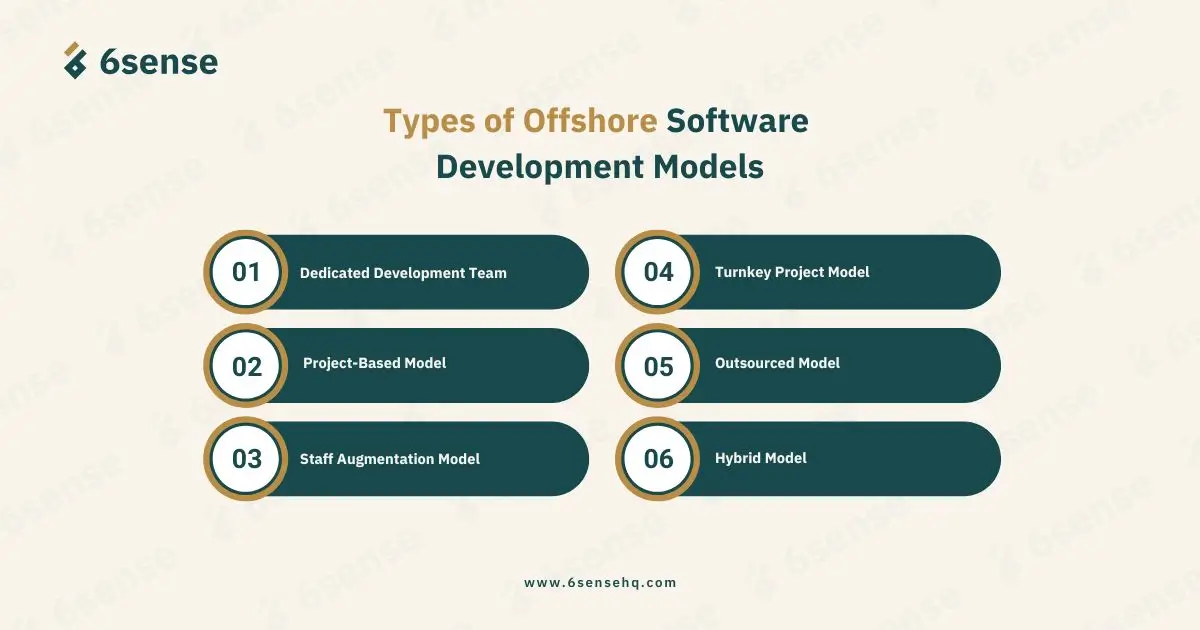
In the Offshore Dedicated Development Team model, your offshore team works exclusively for your startup, acting as an extension of your in-house team.
This model is perfect for startups with long-term development needs and the desire to scale a dedicated team without the overhead of managing employees directly.
In the Project-Based Model, the offshore team works on a specific project with a clearly defined scope and timeline.
The model is best suited for startups with well-defined projects and deadlines, where you need results quickly and within budget.
The Staff Augmentation Model allows you to add offshore talent to your existing in-house team to fill skill gaps or scale quickly.
The staff augmentation model is great for startups that need to add specific skills quickly without committing to long-term contracts.
In the Turnkey Project Model, the offshore team handles the entire project from start to finish, delivering a fully functional product.
It works best for startups that want to outsource the full development of a project and focus on business strategy.
In the Outsourced Model, you delegate specific tasks or components of your project to an offshore vendor, such as development, testing, or design.
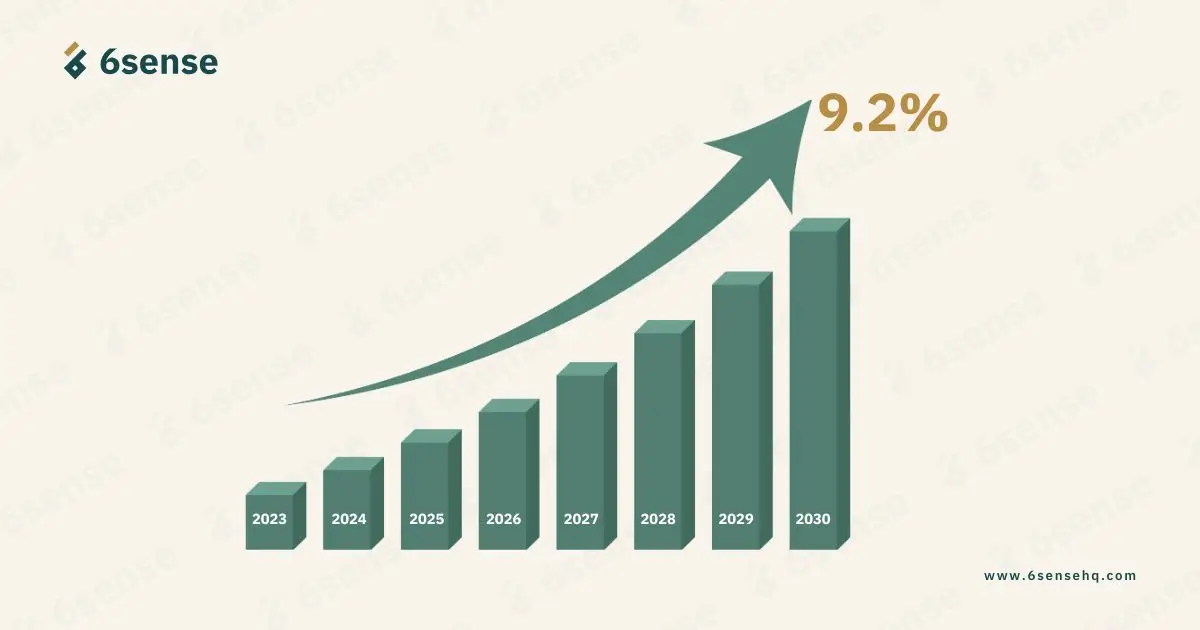
According to Grand View Research, the global IT services outsourcing market is projected to grow at a CAGR of 9.2% from 2023 to 2030, showing steady expansion as more startups embrace outsourcing for flexibility and cost efficiency.
This model is perfect for startups that want to leverage external expertise for particular tasks without outsourcing the entire project.
The Hybrid Model combines elements of multiple offshore engagement models to offer flexibility depending on your project’s needs.
This model is ideal for startups with large, complex projects that require different types of engagement as the project evolves.
Choosing the right offshore software development model is key to your startup's success. Each model offers unique advantages and drawbacks, so understanding the specifics of your project, goals, and available resources is crucial for selecting the best fit.
Whether you need a dedicated team, project-based work, or a hybrid approach, each model can help you scale faster and achieve better results if managed properly.
Evaluate your business needs, define your project scope, and align them with the right model to drive efficiency and success. Once you choose the best model, you can move forward with confidence and take full advantage of offshore talent.
Ready to choose the right offshore software development model for your startup, or still confused? Book a meeting with us today and see how we can help you scale your business with the right offshore strategy.
Optimize your 2026 offshore strategy with a Mirror Stack, Zero Trust security, and AI to scale execution while saving 40-70%.
9 min read
Stop scrolling, start hiring: 15 best offshore dev sites for 2026 with rates, vetting process, and quick picks. Tap in!
14 min read
Offshore ROI in 2026: calculate true TCO, payback & NPV, dodge rework traps, and scale faster, grab the checklist now!
7 min read