


6sense HQ vs DevToDollars: Best MVP Partner in 2026
Compare 6sense HQ and DevToDollars on MVP speed, team models, proof, pricing, and post-launch support to pick the right fit.
15 min read
Learn how early-stage startup MVP development helps founders validate ideas, prioritize features, reduce risk, and launch a scalable product faster.
Written by: AKM Ahsan Created on: 3 Mar 202612 min to read
Imagine you have a brilliant idea that could change the world, but building the perfect product right away could take months, cost too much, and still fail because you didn’t test it first.
That’s where early-stage startup MVP development comes in: it lets you build just enough of your product to solve the core problem and learn what users really want. With an MVP, you can get feedback fast, save money, and avoid building features no one needs.
This blog will guide you through what an MVP really is, how to build one step by step, what you should measure early, and common early‑stage pitfalls to avoid so your startup grows with confidence.
A Minimum Viable Product (MVP) is the simplest working version of a product that delivers core value with only essential features, letting users solve a real problem right away. It isn’t about perfection; it’s about getting something real in the hands of real people to collect feedback and learn fast.
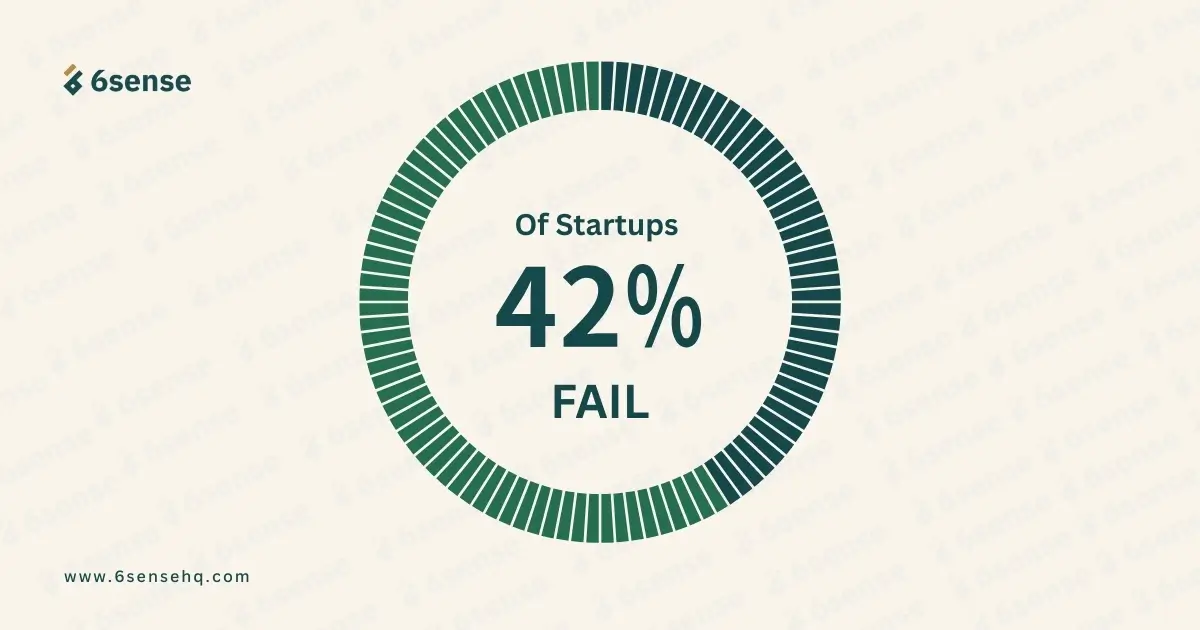
Moreover, MVP helps startups to understand whether their idea actually fits a market need before spending too much time or money on extra features. In fact, around 42 % of startups fail because they build products no one really wants, making early validation crucial.
For early-stage startups, MVPs reduce cost, speed up time‑to‑market, and reduce risk by focusing only on what matters most first.
Lean Startup methodology is a simple way to build a startup without guessing too much. Instead of spending months building a perfect product, you create a small version, launch it to the right users, measure what happens, and learn from the result. This is often called the Build-Measure-Learn loop, and it is crucial for startups because it keeps early startup development focused on real learning instead of assumptions.
The MVP fits into this method because it gives founders the fastest way to test one important assumption: do people actually want this solution? This is where the difference between MVP, prototype, and full product becomes important. A prototype may show the idea, but an MVP gives users something usable enough to test real customer pain points. It can be a simple code MVP, a manual concierge MVP, or a focused feature MVP that tests one core workflow.
If users engage, pay, share feedback, or ask for more, you have useful proof that the idea can move closer to a marketable product. If they ignore it, you learn before spending more money. For early-stage founders, this section works as part of a comprehensive guide to understanding why MVPs are not about building less, but about learning faster before building more.
Building an MVP for your startup gives you a safer and smarter way to move from idea to product. It helps you test the market, control cost, understand users, and make better decisions before building the full version.
An MVP helps founders avoid spending heavily on a full product before they know if the idea works. Instead of building every feature, the team builds only the core flow. This keeps development cost lower, reduces waste, and gives founders more budget for testing, marketing, customer interviews, and future improvements.
A startup idea can sound strong in a pitch deck, but real validation happens when users try it. An MVP lets founders see whether people understand the product, complete the main action, return again, or ask for more. This turns assumptions into evidence instead of relying only on opinions from friends or internal teams.
Investors usually want to see more than an idea. A working MVP can show that the founder understands the problem, has taken action, and has early signals from users. Even small traction, clear feedback, or demo usage can make the startup story more believable during investor conversations and early fundraising meetings.
An MVP gives founders a practical way to compare development vendors. Instead of choosing only from portfolios or promises, founders can see how a team thinks, communicates, handles product scope, and delivers a working version. This makes vendor selection safer before committing to a larger product build or long-term technical partnership.
When founders start with too many ideas, the product can become confusing very quickly. An MVP forces the team to choose the most important problem, the main user, and the simplest path to value. This creates focus and helps the team avoid unnecessary features during the early stage of product development.
Many successful startups did not begin with a perfect product. They started with a simple version, tested one clear idea, and used real feedback to decide what to build next. These examples show how MVP thinking works in real life.
Airbnb did not begin as a global travel platform with reviews, secure payments, host dashboards, mobile apps, and advanced search filters. The first version was much simpler. The founders had an apartment in San Francisco and noticed that hotel rooms were hard to find during a busy design conference. So they offered air mattresses in their apartment and created a basic website to show the listing.
This simple version tested one important question: would people pay to stay in someone else’s home instead of a hotel?
The answer was yes. The early version was not perfect, but it proved that the problem was real and that some users were open to the solution. That learning gave the founders a reason to keep building. For early-stage founders, the lesson is clear: your MVP does not need every feature. It needs to test the riskiest assumption behind the business.
Dropbox had a difficult product to explain. File syncing sounds simple today, but at the time, many users were frustrated with carrying USB drives, emailing files to themselves, or losing track of file versions. Building a full file-syncing system before proving demand would have taken a lot of time and technical effort.
Instead, Dropbox used a demo video to show how the product would work. The video explained the main value clearly: your files could stay synced across devices without extra effort. It helped users understand the product before the complete version was widely available.
This was a smart validation move. It showed that people cared about the problem and wanted the solution. For founders, the key lesson is that early validation does not always need a full product. Sometimes a strong demo, prototype, or walkthrough can help you test whether the market understands and wants your idea.
Buffer started with a very small MVP. Instead of building the full social media scheduling tool first, the founder created a simple landing page that explained the idea. The page showed what Buffer would do and invited people to show interest. When people entered their email, it proved that the problem was interesting enough for users to respond.
After that, Buffer added more learning steps. The founder tested whether people would only sign up for free or whether they would also consider paying. This helped validate not just interest, but possible business value.
The lesson from Buffer is very useful for early-stage startups: you can test demand before building the complete product. A landing page, waitlist, pricing test, or manual version can help you understand whether users care enough to take action.
Before you start building, it’s important to decide which features are truly essential for the MVP development of your startup. Prioritizing the right features helps you focus on solving the key user problem, reducing MVP development cost, and launching quickly so you can collect real feedback. This is especially important for startups because every early decision affects the startup journey, from first idea to growth.
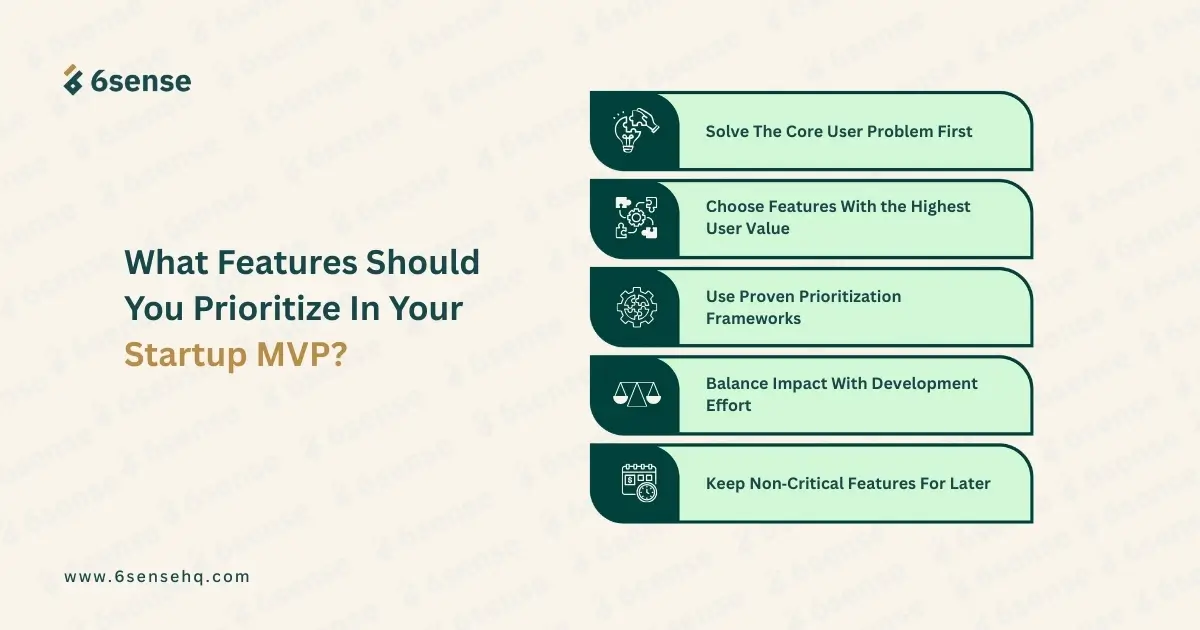
Your MVP should include only features that directly solve the main pain point your target users are experiencing. Avoid any nice-to-have functionalities in the first release; they distract from validation goals and delay your launch.
Focus on what users absolutely need to complete meaningful tasks linked to your core value proposition. At this stage of the startup lifecycle, the goal is not to build every possible product or service feature, but to prove that your solution solves one real problem well.
Prioritize features that create clear, immediate value for users. These are the functionalities that early adopters will rely on to understand and appreciate your solution.
Think about what users must be able to do first in order for them to experience your product’s core benefit. A strong business idea becomes easier to validate when users can quickly understand the value, complete the main action, and give useful feedback based on real usage.
Methods like MoSCoW (Must-have, Should-have, Could-have, Won’t-have), RICE (Reach, Impact, Confidence, Effort), or value-versus-effort matrix help you rank features objectively.
These frameworks help eliminate guesswork and bring clarity to what should stay in the MVP, ensuring you launch with the right scope. This also keeps your development process more organized, especially if you are preparing for a future investment stage or planning to speak with venture capital investors.
Evaluate how much effort it takes to build a feature versus how much value it delivers. High-impact, low-effort features should be built first, while complex features that offer less user value can wait.
This balance helps you deliver a functioning MVP quickly without over-investing time or money. It also prevents a piecemeal MVP, where random features are added without a clear connection to the main user problem or product direction.
Features that don’t affect the core experience should be put into a future backlog. These include enhancements, advanced filters, design polish, or user-requested wishlist items.
Saving them for post-MVP iterations lets you stay lean while still planning growth later. The best MVP does not try to look complete from day one. It focuses on the core experience first, then improves step by step as the startup learns from users.
Knowing what not to do is just as critical as knowing what to do.
These are the tangible outputs you should aim to have by the end of your MVP development phase, clear markers that your MVP is ready for real users.
✔ Problem Statement - A concise description of the user pain point your MVP solves.
✔ Ideal Customer Profile (ICP) Definition - Who you are building this for and why they care.
✔ Core User Flow - A simple documented journey for your key user action.
✔ Prototype - A clickable or visual mockup of the main screens.
✔ MVP Build - Working core features deployed for a small audience.
✔ Analytics Events - Tracking events to measure engagement and behavior.
✔ Feedback Loop - A system for capturing and organizing user input.
There are different types of MVP, but the strongest MVP helps you test whether your solution fits the market, reduces risk, and gives you real feedback. Follow these clear steps to go from concept to working product fast.
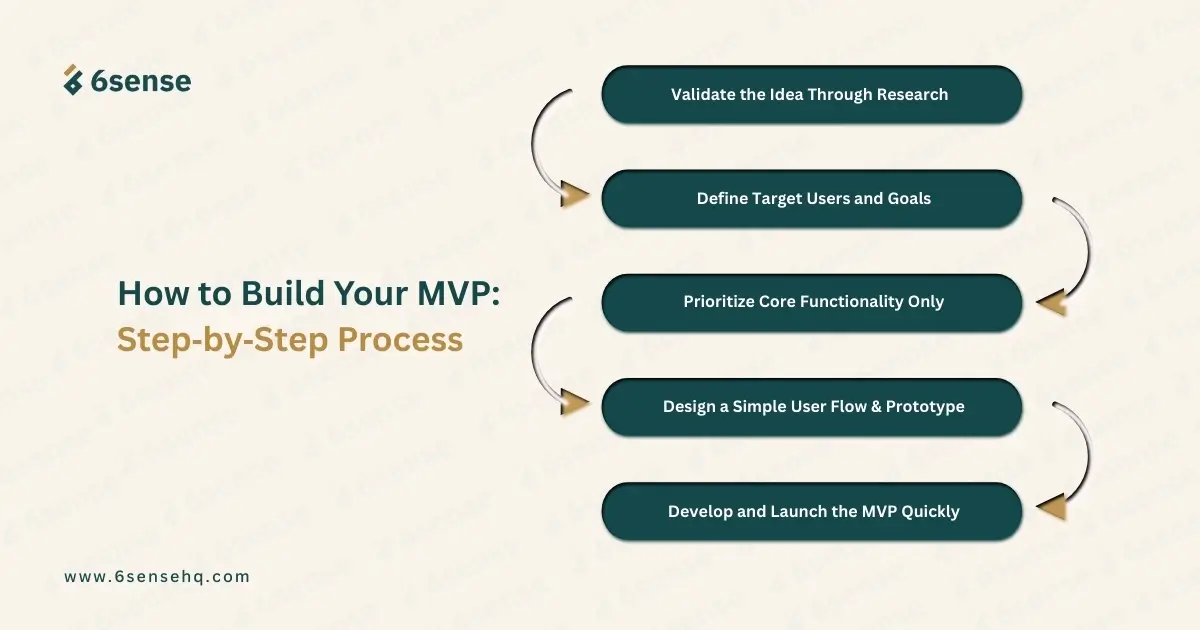
Before building anything, talk to potential users, study competitors, and check if the problem you want to solve actually matters.
Good market research ensures you are developing something people truly need, not just something you think they need. This step reduces risk and improves your focus.
Know exactly who will benefit most from your MVP and what outcome you want to measure. Create a simple user profile and understand their pain points. This helps you tailor features to real needs rather than building something too broad or unclear.
Decide which functionality is essential to deliver value. Skip nice‑to‑have features and concentrate on those that solve the main user problem. Narrowing your scope helps you build faster and learn sooner from real usage. For founders creating software products, building an MVP for a technology startup also means prioritizing technical feasibility, system reliability, and the integrations required to support the core user experience.
Map out how people will interact with your product and sketch basic screens or a prototype before coding. This step lets you visualize the user experience and fix confusing parts early, saving time later in development.
Use agile methods to build the MVP version with essential features first. Focus on being functional and reliable, not perfect. Launch it to early users as soon as possible so you can start learning from real behavior and feedback.
While every project differs, here are useful time ranges founders should expect:
• No‑Code / Landing Page MVP: 2-4 weeks • Simple Mobile or Web MVP: 4-8 weeks • Complex Workflows or SaaS MVP: 8-12+ weeks
These depend on scope, team resources, and feature complexity. Subscription-based products may require additional planning for onboarding, billing, user roles, dashboards, and recurring workflows. Following a practical MVP development approach for SaaS startups can help founders determine which of these capabilities are essential for initial validation and which can wait until later releases.
Launching your MVP is just the beginning. The real value comes from listening to user feedback and iterating fast.
This Build-Measure-Learn cycle helps you evolve your product from a simple MVP to a full solution with strong market fit. Don’t be afraid to pivot if insights show your idea needs a twist!
| Stage | Goal | Key Output |
| PoC | Test technical feasibility | Internal validation |
| Prototype | Validate usability & design | Clickable mockups |
| MVP | Validate market demand | Functional product + data |
MVP development gives early-stage startups a smart way to learn quickly, reduce risk, and test real market interest before investing in full product builds. A well‑planned MVP development service lets you validate assumptions, gather honest user feedback, and refine your product based on what real users truly need.
As you grow, keep focusing on core values, iterate fast, and don’t be afraid to pivot if insights point you in a new direction. The MVP you build today can become the foundation for a scalable, successful product.
Book a 30‑minute MVP Scope Call with 6sense HQ to define your key features, timeline, and cost estimate
Compare 6sense HQ and DevToDollars on MVP speed, team models, proof, pricing, and post-launch support to pick the right fit.
15 min read

Compare 6sense HQ alternatives for MVP development in 2026 and find the best software team for your startup budget and goals.
17 min read

Learn whether one developer can build an MVP in 2026 with cost, scope, AI tools, low-code tips, risks, and launch advice.
22 min read