


How to Transition to Offshore Teams Without Losing Control
Optimize your 2026 offshore strategy with a Mirror Stack, Zero Trust security, and AI to scale execution while saving 40-70%.
9 min read
Offshore development isn’t just about saving money, it’s about knowing where every dollar delivers the most impact. Compare rates worldwide and plan your budget wisely.
Written by: Nasif Sid Created on: 25 Aug 202510 min to read
When companies want to build great software without breaking the bank, they often turn to offshore software development. The offshore software development cost in 2025 typically ranges from $25 to $70 per hour, depending on the region and expertise level.
Well, businesses choose this route not just to save money but also to access global tech talent, work with specialized developers, and scale teams faster. It’s a smart move when done right, especially for startups and growing companies with tight budgets.
In this blog, I’ll break down everything you need to know: hourly rates by country, cost differences by role and seniority, hidden fees to watch out for, and tips to get the most value for your budget.
Let’s dive in!
Offshore software development is still popular in 2026 because it gives your company a faster, more cost-effective way to build high-quality software.
It's especially useful when you're looking to scale quickly, save on hiring costs, and tap into global expertise. In simple terms, offshore development means outsourcing your software projects to teams in other countries
For example, the average salary of a U.S.-based developer is around $120,000 per year. But in contrast, offshore developers in Bangladesh, the Philippines, or Eastern Europe can deliver the same quality for far less.
These teams usually offer competitive rates and solid technical skills, making them a smart option for businesses of all sizes.
Here’s why more companies are sticking with offshore development:
Offshore software development costs vary widely depending on the region, skill level, and project complexity.
If your company is exploring outsourcing in 2026, understanding what developers charge in different countries can help you plan better and avoid surprises.
Below are breakdown with average rates for different offshore models and software developers across popular offshore destinations.
Offshore Development Cost by Engagement Model
| Model | Best For | Pricing Structure | Average Cost (USD) |
| Dedicated Team | Long-term, evolving projects | Monthly salary per developer | $2,500–$8,000/month per developer |
| Staff Augmentation | Filling skill gaps | Hourly or monthly | $2,000–$7,000/month depending on role |
| Project-Based Outsourcing | End-to-end solution | Fixed or milestone-based | Varies widely by scope and vendor |
| Managed Services | Ongoing support and maintenance | Subscription or retainer-based | $1,000–$10,000+/month |
| Fixed-Price | Short, clearly defined projects | Total project cost | $3,000–$30,000+ per project |
| Time & Material (T&M) | Flexible-scope, evolving projects | Hourly or daily billing | $25–$70/hour based on region |
Average Offshore Developer Rates by Country (2026)
| Region | Hourly Rate (USD) | Junior Dev | Mid-Level Dev | Senior Dev |
| Bangladesh | $20–$30 | ~$20 | ~$25 | ~$30 |
| Philippines | $20–$35 | ~$20 | ~$28 | ~$35 |
| India | $20–$40 | ~$20 | ~$30 | ~$40 |
| Vietnam | $20–$40 | ~$22 | ~$30 | ~$40 |
| Ukraine | $30–$60 | ~$30 | ~$45 | ~$60 |
| Poland | $35–$70 | ~$35 | ~$50 | ~$70 |
| Mexico | $30–$55 | ~$30 | ~$42 | ~$55 |
These ranges are based on verified market data from 2024–2025 and may vary depending on factors like tech stack, city, experience level, and engagement model. Cost alone, however, doesn’t tell the full story choosing among the best offshore countries also depends on talent availability, communication fit, time-zone overlap, and long-term scalability.
Calculate Your Offshore Development Cost in 60 sec.
This gives you a clear idea of how much you might spend depending on experience level and job type. Developer rates vary not just by location, but also by how skilled they are and what role they play.
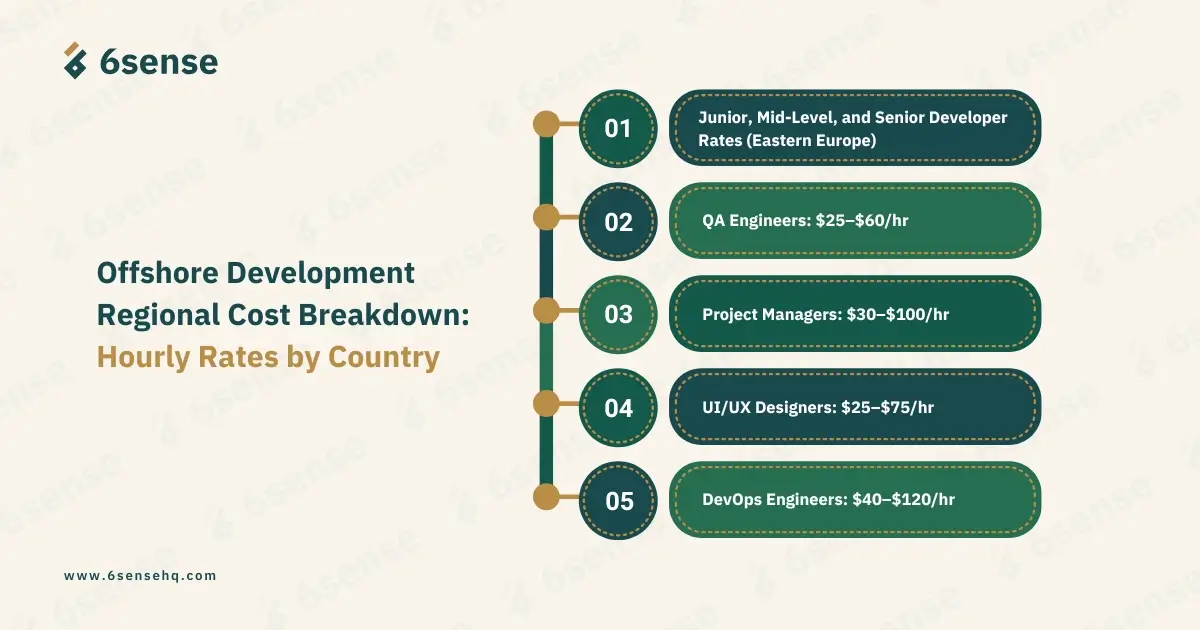
In Eastern Europe, junior developers cost about $900–$2,100/month, mid-level developers range from $2,500–$4,400, and senior developers earn around $4,400–$6,100/month. These differences come from experience and speed; senior devs can solve complex problems faster.
Quality Assurance (QA) engineers make sure your product works perfectly. Manual testers are usually on the lower end of the range, while automation experts can earn $60/hr or more. Good QA prevents bugs and saves time later in development.
Project Managers (PMs) keep everything on track from timelines to team communication. In Eastern Europe or Latin America, you can expect to pay $30–$60/hr, while PMs in the U.S. or UK can charge up to $100/hr. Their efficiency has a big impact on your overall cost.
UI/UX designers handle how your app looks and feels. A well-designed user experience boosts engagement and reduces churn. Rates range from $25/hr in Asia or Eastern Europe to $75/hr in North America or Western Europe. Good design up front avoids costly changes later.
DevOps engineers are key to automation, cloud setup, and deployment. They’re in high demand, especially if your app needs strong infrastructure or continuous delivery. In countries like Poland or Brazil, rates start around $30/hr, while U.S.-based DevOps experts may charge up to $120/hr.
The difference between these 3 models, offshore, onshore, and nearshore, mainly comes down to cost, timezone, communication ease, and available talent. Each has its pros and cons, and the right choice depends on your budget, project size, and preferred level of collaboration.
| Model | Average Cost | Talent Pool | Time Zone & Communication | Example: Mobile App Cost |
| Offshore | Lowest ($15 – $40/hr) | Very large (global) | High time zone/cultural gaps | ~$40,000 (e.g., India) |
| Nearshore | Medium ($25 – $65/hr) | Moderate (regional) | Better overlap, easier to manage | ~$65,000 (e.g., Latin America) |
| Onshore | Highest ($80 – $200/hr) | Limited (local market) | Seamless, same culture/time zone | ~$120,000 (e.g., USA) |
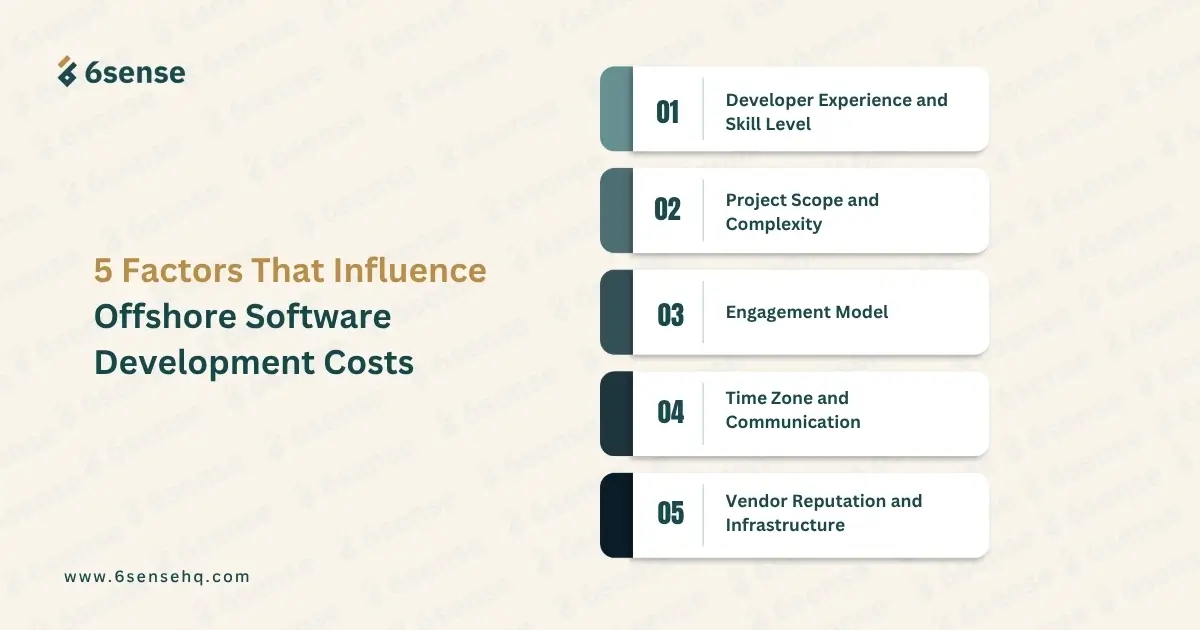
Offshore development rates aren’t only based on location. Several other factors can directly impact what your business ends up paying. Knowing these ahead of time helps you plan better and avoid unnecessary expenses.
Here are the most common cost drivers to consider:
Offshore development can be budget-friendly, but if you’re not careful, hidden costs can creep in and affect your overall ROI.
These aren’t always listed in contracts but can impact timelines, quality, and communication.
Here are some common hidden costs to be aware of:
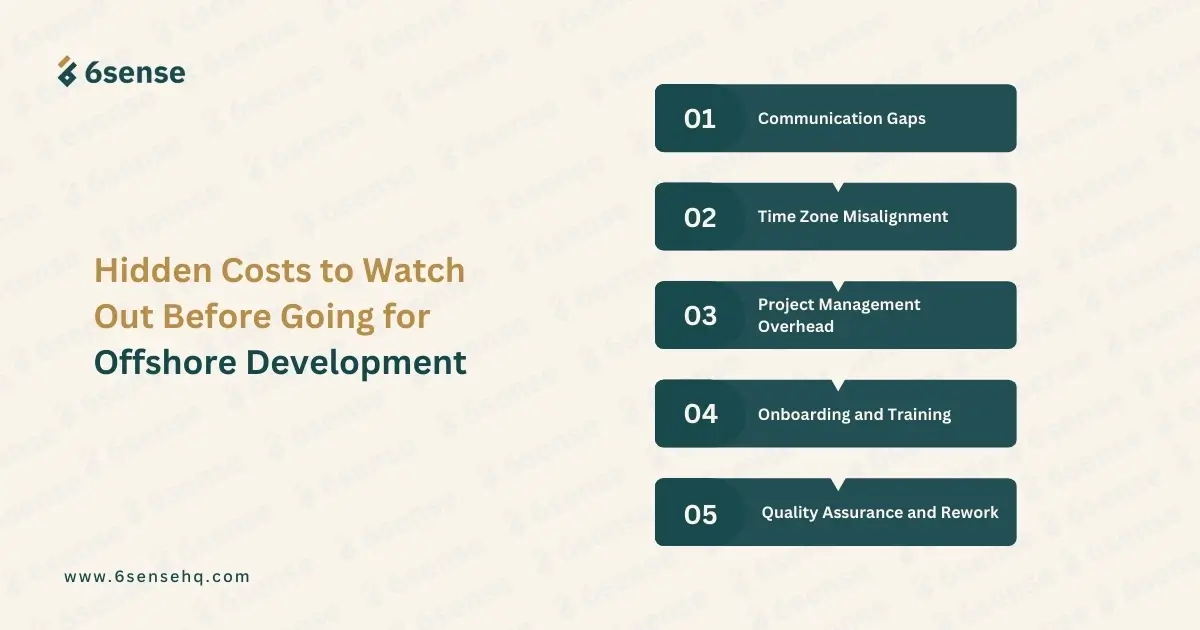
Poor English fluency or lack of technical clarity can lead to misunderstandings, rework, and delays.
Working across vastly different time zones can cause slow feedback loops, missed stand-ups, and coordination gaps.
If the offshore team doesn’t provide strong project management, your in-house team may spend extra hours guiding and reviewing work.
Even skilled offshore developers need some onboarding to understand your product and codebase. That time isn’t always factored into initial estimates.
Low hourly rates sometimes mean lower code quality. Rewriting or debugging poor-quality work can wipe out initial savings.
Hidden Costs and Budget Planning Considerations often catch companies by surprise. It’s easy to think only in terms of software development hourly rates, but a lot more goes into the final bill.
Let’s break down the hidden costs you should plan for from the start:
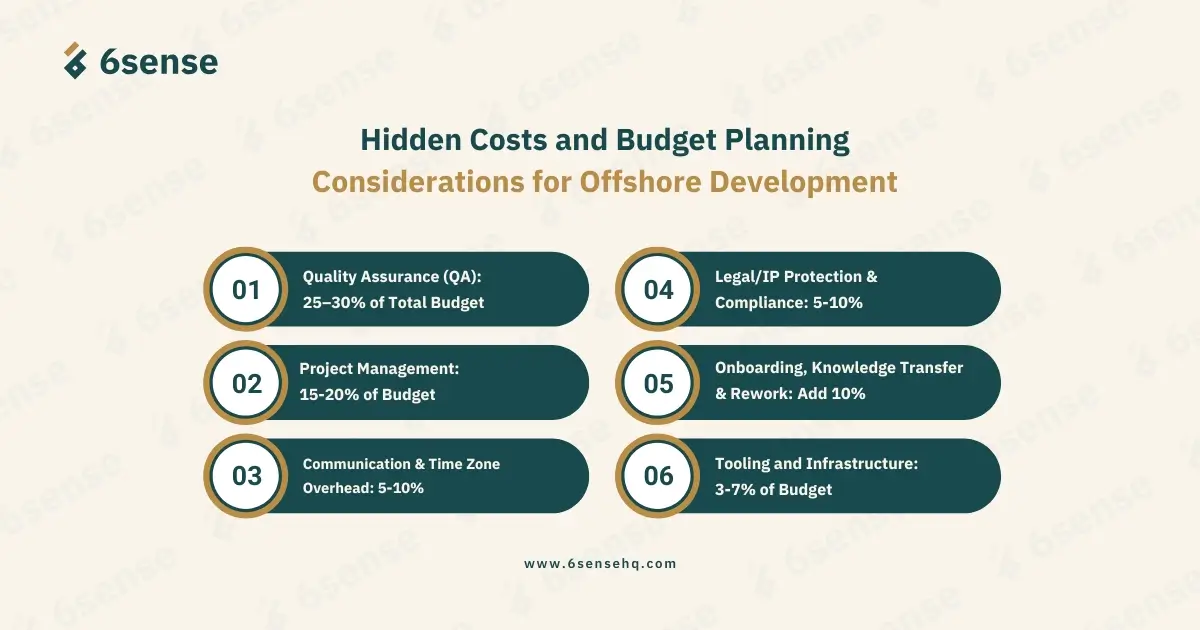
QA is not optional; it’s essential. Whether manual or automated, testing helps catch bugs early and ensures everything works well across devices. Expect QA to take up about 25-30% of your total budget. It’s money well spent to avoid costly fixes later.
Your development team needs someone to guide the ship. Project managers handle schedules, deadlines, and team coordination. This role usually costs 15-20% of the budget, but without it, things can fall apart fast due to missed tasks or unclear goals.
Working with teams in different time zones can lead to delays, repeated meetings, or miscommunication. This adds about 5-10% to your costs. Having at least a few overlapping work hours each day helps keep things smooth and efficient.
Protecting your code, user data, and intellectual property isn’t free. Depending on where your offshore team is located, legal agreements and compliance measures can add another 5-10% to your overall cost. Always consult a legal advisor when working internationally.
Every new team needs time to understand your product. Add around 10% extra for onboarding, documentation, and possible rework. A strong start here avoids confusion and errors down the road, which can be much more expensive to fix later.
You’ll likely need paid tools, such as project tracking, CI/CD pipelines, and testing platforms. These add up to around 3-7% of your budget. It's worth investing in the right tools to keep things running smoothly and efficiently.
If you want to get the most value out of offshore development, it's not just about finding the lowest rates. It’s about making smart decisions that save money without sacrificing quality.
Here are a few ways your business can keep costs under control:
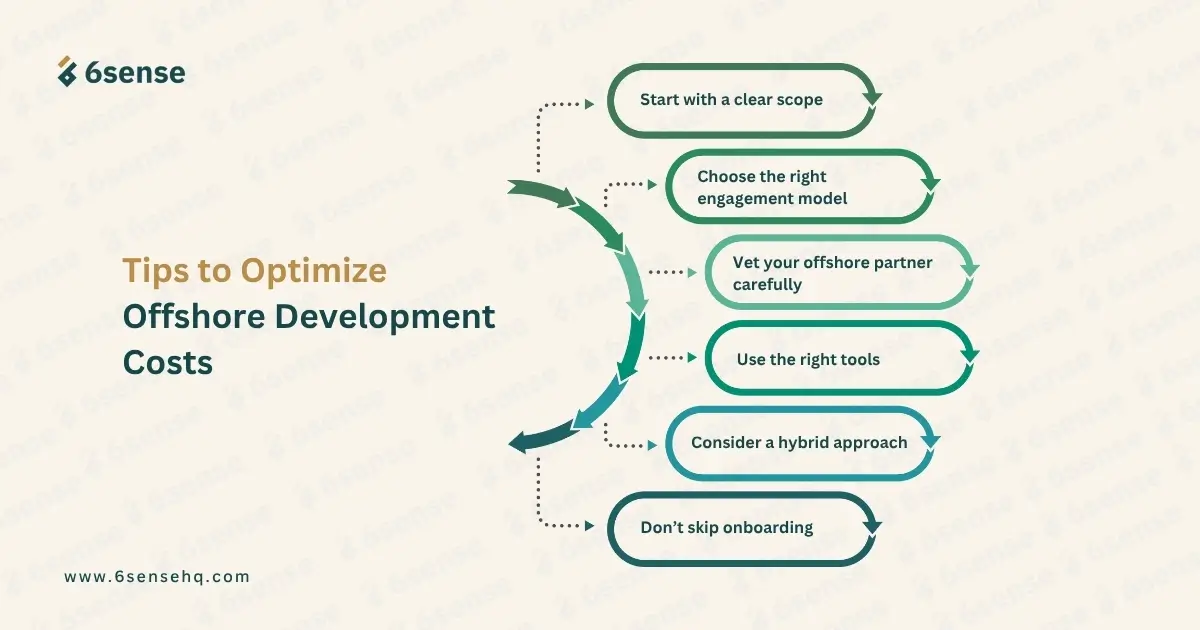
Define your project requirements in detail before development begins. This helps avoid miscommunication and prevents expensive changes later.
Fixed-price models work best for well-defined projects. If your project is ongoing or evolving, a dedicated team might be more cost-effective.
Look at reviews, past projects, and developer portfolios. The lowest hourly rate may come with hidden trade-offs in quality.
Collaboration platforms like Slack, Jira, and GitHub can improve communication and keep your team aligned.
Let your in-house team handle planning and strategy while offshore developers take care of execution. This gives you more control without increasing costs too much.
Even skilled developers need time to understand your product and workflow. A proper onboarding process saves time and money in the long run.
Offshore development can be a smart way to build software while saving money, but it’s not always simple. From choosing the right team to managing time zones and communication, success depends on good planning.
The offshore software development cost may look low at first, but real value comes from long-term thinking, not short-term cost savings. If you're unsure where to start, take time to compare vendors or speak with experts. It’s better to invest wisely than fix mistakes later.
Want to hire offshore developers you can truly count on? A reliable partner like 6sense HQ is getting it right; reach out today!
Optimize your 2026 offshore strategy with a Mirror Stack, Zero Trust security, and AI to scale execution while saving 40-70%.
9 min read

Stop scrolling, start hiring: 15 best offshore dev sites for 2026 with rates, vetting process, and quick picks. Tap in!
14 min read

Offshore ROI in 2026: calculate true TCO, payback & NPV, dodge rework traps, and scale faster, grab the checklist now!
7 min read