


6sense HQ vs DevToDollars: Best MVP Partner in 2026
Compare 6sense HQ and DevToDollars on MVP speed, team models, proof, pricing, and post-launch support to pick the right fit.
15 min read
Discover how to validate, plan, and build a SaaS MVP with the right features, tools, and timelines so you can launch faster with less risk.
Written by: AKM Ahsan Created on: 4 Mar 20266 min to read
A Minimum Viable Product (MVP) is the simplest version of your SaaS product that solves a real problem for users while letting you validate demand without huge costs or long waits. It’s your first step toward launching something real that customers will use.
MVPs are really powerful because they help you learn fast, save time, and avoid building features people don’t need. Instead of guessing, you find out real user behavior early, which is the smartest way to build anything successful.
In this blog, we’ll walk you through why validation matters, how to plan and build your MVP, what features to include (and skip), and practical tips for launching fast like a pro.
Validating first can save your lean startup MVP weeks of wasted work and big budget mistakes. These points help you research demand and ensure people actually want what you plan to build, as well as how to validate a SaaS MVP. For a broader understanding of validation, feature prioritization, and iterative product delivery, founders can review this practical approach to MVP development for startups before committing significant time or budget to a SaaS build.
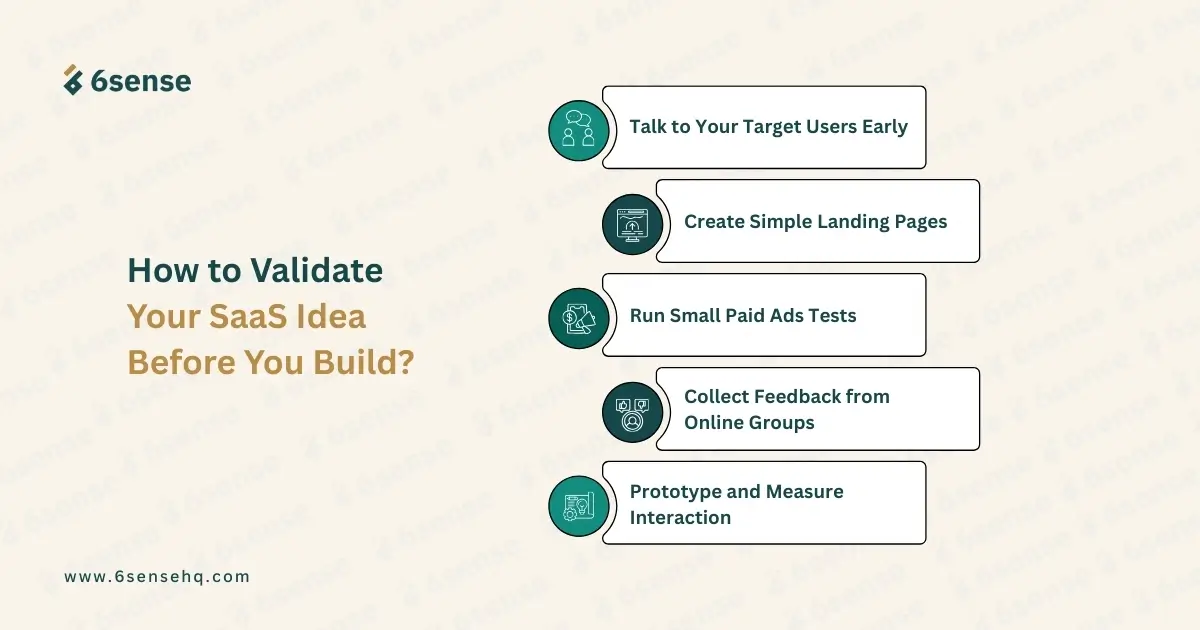
Before coding anything, speak with people who could use your app. Ask about their daily challenges, tools they use now, and frustrations. Hearing real needs helps refine ideas and avoid assumptions that lead nowhere, an essential validation step many founders skip.
According to ExplodingTopics, 34 % of startup failures occur due to poor product‑market fit, showing how critical early customer understanding is before building your SaaS MVP.
Build a basic landing page that explains your idea clearly. Include signup or interest forms to measure real interest. If a good number of users respond, you know your idea resonates before building anything.
Put small ad campaigns in front of your potential customers. Track clicks and sign‑ups; if people are willing to engage even before the product exists, that’s a strong demand signal that your idea resonates.
According to Abdo Riani in Forbes, early-stage marketing experts note that testing audience interest with small paid ads is one of the few scalable ways to validate real demand before product build, and can help refine positioning early.
Go into relevant online communities and ask simple questions about pain points. The patterns you see in answers help confirm whether your solution fits a common need or not.
Use simple prototypes to simulate the experience. Let users click, explore, and react. Real behavior here is richer than just talking; it shows whether they get the value of your concept.
Building an MVP is a smart process with clear steps. These help you reduce risk, focus on what matters, and learn from real users instead of guessing.
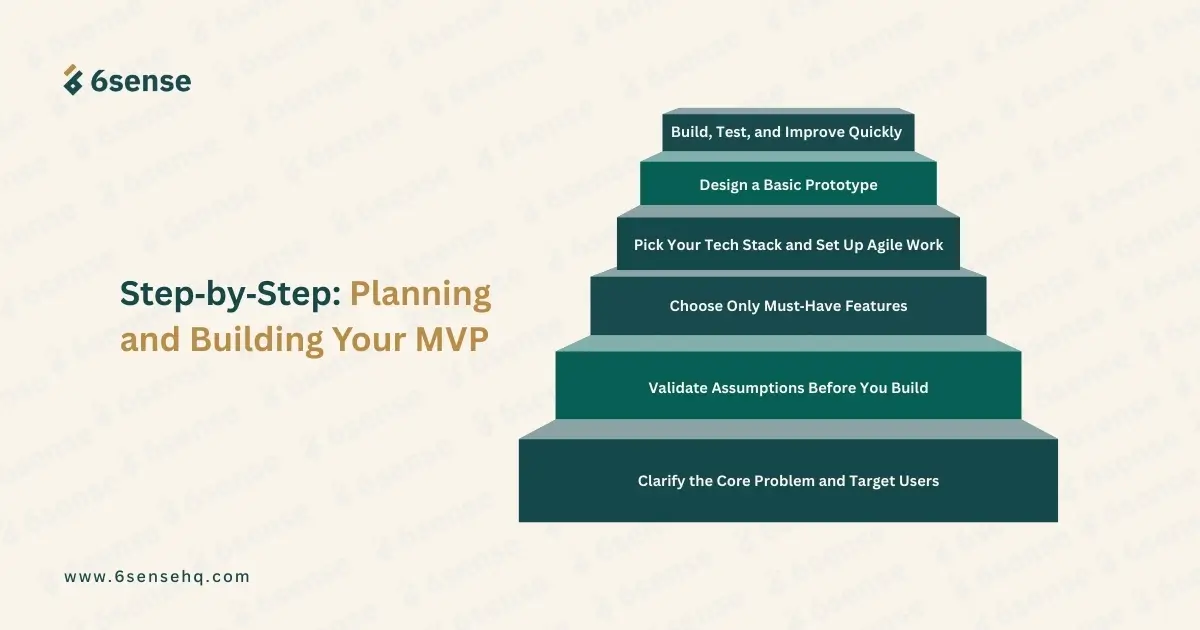
Start by writing down the exact problem your SaaS MVP will solve and who has that problem. This isn’t about broad audiences; it’s specific people with clear pain. Without this, you risk building something no one needs, a mistake many founders share from experience.
List your biggest assumptions about your product and users. These become your test checkpoints. Turn each into a question you can confirm or reject through talking to users or early testing. Real feedback beats guessing and saves time. Founders who are still moving from initial research to their first product release can follow a step-by-step MVP roadmap for early-stage startups to organize validation, scope selection, launch planning, and early measurement.
Focus only on the essential features that help users solve the core problem. Reddit founders often say the fastest MVP ships because it stays simple. Prioritizing tightly keeps the product development process lean and quick.
Create visual sketches or a simple prototype before coding. This helps spot mistakes early and lets others give user feedback without costly software development work. Great design early avoids confusion later.
Choose familiar, scalable technologies so your team moves faster and avoids avoidable problems. Plan work in short cycles (sprints), so you build parts, test, and adjust rather than waiting for everything at once. Technical architecture should remain lean enough for rapid validation while still supporting future iterations. This MVP-building framework for technology startups explains how founders can balance development speed, technical feasibility, and maintainable product foundations.
Launch the MVP as soon as it’s usable. Get feedback, watch how users behave, and iterate. Remember what Y Combinator’s Michael Seibel said:
Your MVP should be powerful but minimal. Here’s how to think about features that matter most and those you should skip at first.
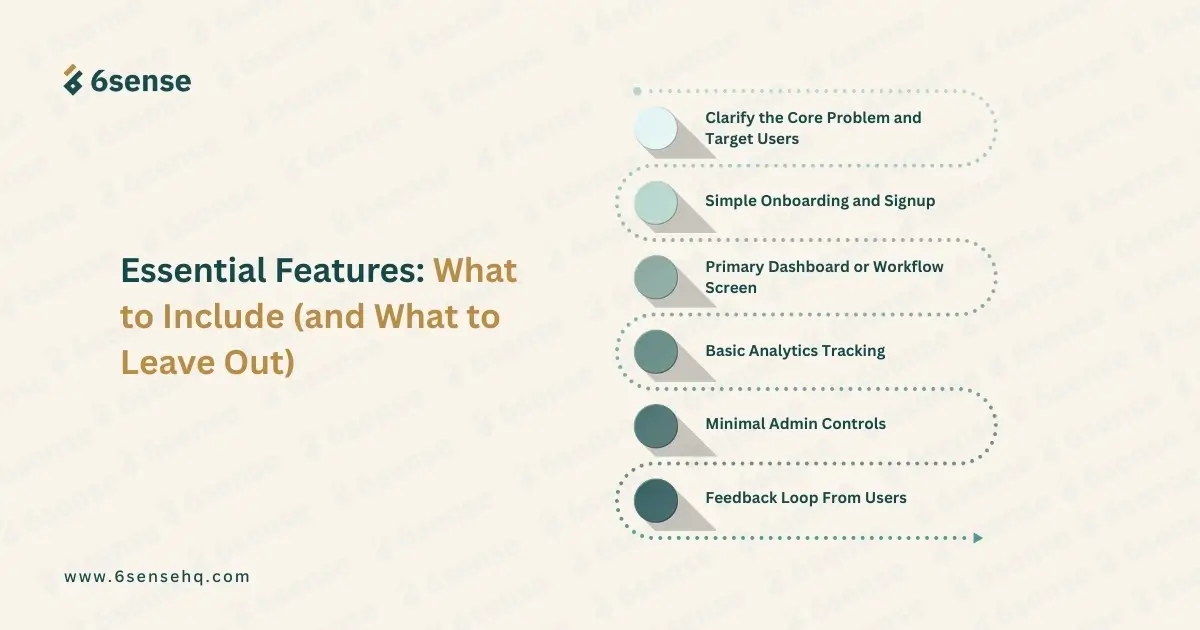
Identify the one thing your product must do to prove value. Include only that feature and nothing extra. This focus helps you test your idea quickly and avoid building unnecessary functionality.
Users must know how to start using your product with zero confusion. Basic onboarding lowers early abandonment and helps you see real usage patterns instead of frustration dropout.
Include 1 main screen where users perform the key task. If it doesn’t help them solve the problem, it’s not MVP material. Keep workflows direct and friction‑free. Dropbox’s early MVP demo focused on one simple workflow, syncing and sharing files, letting them validate demand before full build.
Tracking lets you see what users actually do, not just what you think they do. It’s crucial because almost 42% of startups fail due to building something customers don’t really want or need. It means if you don’t measure real usage, you could miss critical signals about product‑market fit early on.
You don’t need a full admin panel yet. You just need enough to manage basic user settings and monitor performance. Too much admin work distracts from validation.
Last but not least, you need to include a way for users to give direct feedback. Early reactions help shape your roadmap and highlight what customers truly want next.
The key to MVP success is speed without chaos. This table shows how typical MVP builds can be organized, who does what, and the tools that make it smoother.
| Timeline | Teams | Tools |
| 1-2 weeks: Plan & Validate | Founder + PM | Figma, Miro |
| 2-4 weeks: Prototype & UX | Designer + PM | Figma, Sketch |
| 4-8 weeks: Build Core MVP | Dev Team | React, Node, Firebase |
| 8-10 weeks: Test & Optimize | QA + Dev | Cypress, Postman |
| 10-12 weeks: Launch & Monitor | Dev + Growth | Google Analytics, Mixpanel |
MVP development for a SaaS startup is one of the smartest things you can literally do. Instead of guessing what users want, you see how real people interact with your idea. You learn, adjust, and avoid wasted time and money.
Focus on validating first, building only what truly matters, and launching quickly so you gather real feedback. The faster you learn, the better your product will become. Persistence, data, and customer love will drive your SaaS from MVP to complete success.
Need clarity on your SaaS MVP? Book a meeting with our expert CTO!
Compare 6sense HQ and DevToDollars on MVP speed, team models, proof, pricing, and post-launch support to pick the right fit.
15 min read

Compare 6sense HQ alternatives for MVP development in 2026 and find the best software team for your startup budget and goals.
17 min read

Learn whether one developer can build an MVP in 2026 with cost, scope, AI tools, low-code tips, risks, and launch advice.
22 min read